2026-10-13 ·
What Causes a Dishwasher to Leave Dishes Dirty?
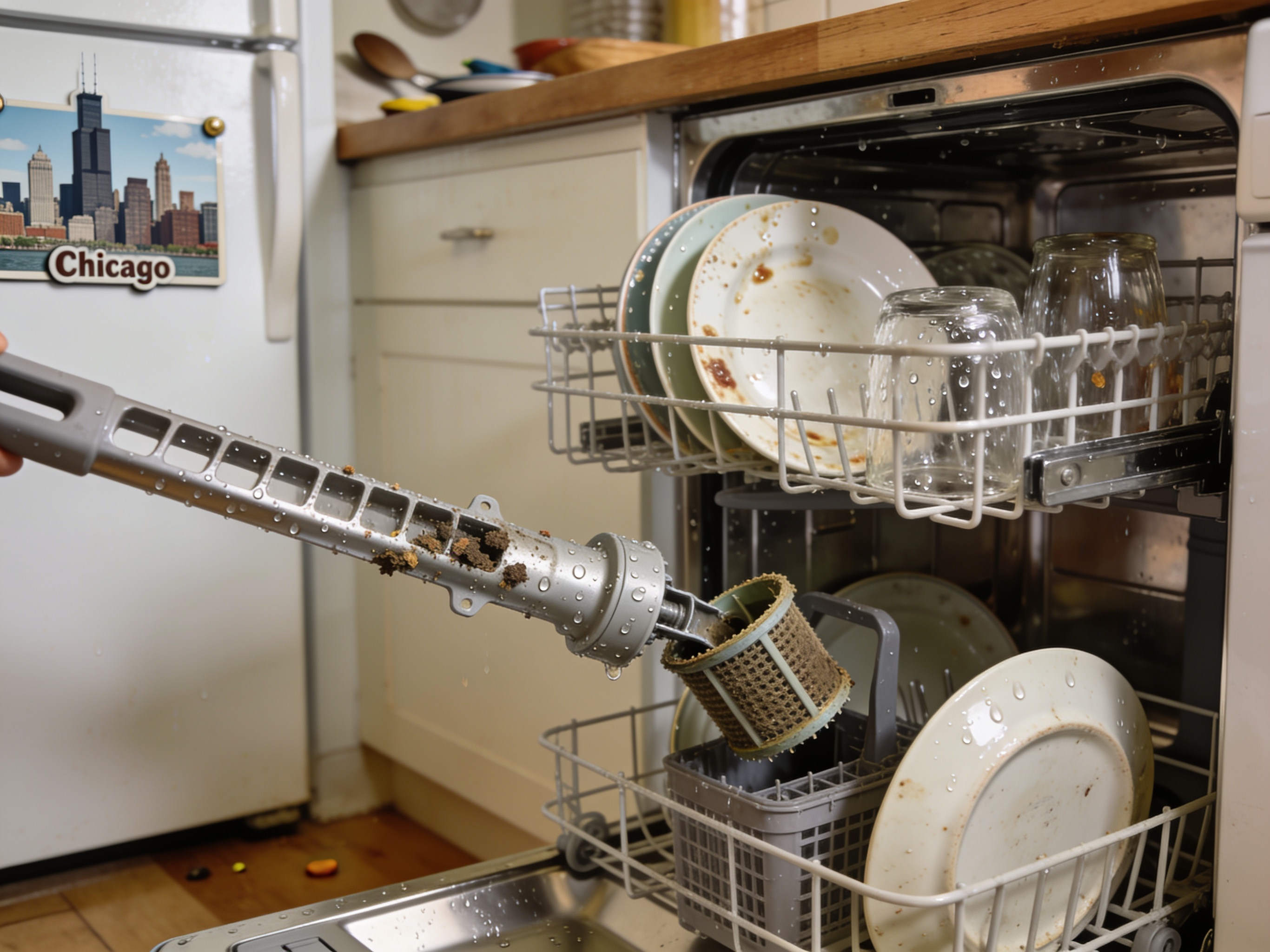
When a dishwasher leaves dishes dirty, the cause is almost always one of four things: a clogged filter or food trap, spray arms that can't reach the dishes, detergent or water chemistry that isn't working, or water that isn't hot enough to dissolve grease. Many of these problems cost $0–$25 to fix yourself, such as cleaning a filter or clearing a spray arm. Others, like a failing heating element or a worn circulation pump, typically run $150–$400 once a technician is involved. Working through the causes in order saves money and usually points you to the right fix quickly.
Clogged Filter and Food Debris Buildup
The filter at the bottom of the tub is the most common culprit, and it is also the easiest to overlook. Food particles, eggshell fragments, and grease collect in the sump and the mesh screen over time, and once they build up, the pump recirculates dirty water back onto your plates. Most owners never pull the filter until something goes wrong, so a film of residue on glassware is often the first clue. Remove the lower rack, twist out the cylindrical filter (check your manual for the exact release method), and rinse it under warm water with a soft brush.
Pay attention to the drain as well. If standing water remains after a cycle, the drain hose or air gap may be partially blocked, which can also leave residue behind. Scrape food off the dishes before loading, and run the disposal before the dishwasher drains if your plumbing is connected that way. In older Lincoln Park and Logan Square buildings where drain lines have been patched over the decades, a slow drain can make filter clogs return faster than expected.
Spray Arms, Nozzles, and Water Pressure
Spray arms spin because water is pushed through small nozzles, and even minor blockages change the pattern dramatically. Hard particles from seeds, rice, or pasta can lodge in the holes, leaving the top rack dishes dirty while the bottom rack looks fine. Pull the arms off (most lift out or unscrew by hand), and clear each hole with a toothpick or a thin wire. Make sure the arm spins freely; a cracked bearing or a stuck hub will stop the spray from covering the load.
Water pressure matters too. If your home's supply has dropped, or if a shutoff valve under the sink is partly closed, the dishwasher may fill slowly and spray weakly. This tends to show up in older buildings, and in Chicago it can appear after pipe work in winter when lines are disturbed. A quick test is to run the kitchen faucet at full flow and see whether the pressure feels normal.
Detergent, Rinse Aid, and Water Chemistry
Detergent is the most overlooked variable. Old pods that have absorbed humidity lose strength, and a low dose of powder or gel can leave a cloudy film, especially on glassware. Use a fresh detergent, follow the amount printed on the package for your water conditions, and keep rinse aid topped up, since it helps water sheet off instead of beading. Overloading the detergent cup is just as harmful, because undissolved product can gum up the door latch and spray arm.
Water hardness also changes results. Chicago's water comes from Lake Michigan and is treated before it reaches your tap, but hardness can still vary by building and by the condition of the plumbing downstream. Mineral deposits show up as white spots or a chalky haze. If you see this, a rinse aid and a dishwasher-safe cleaner used monthly usually improve results without a service call.
Water Temperature and Heating Problems
Dishwashers need water hot enough to melt fats and activate detergent, typically in the range of 120–140°F at the inlet. In Chicago, winter water lines in older homes in Andersonville, Uptown, and Rogers Park can run cooler, especially when the water heater is far from the kitchen. Run the hot tap at the sink for 30 seconds before starting a cycle, and consider checking the water heater setting if your dishes consistently come out greasy.
If the water is hot but dishes still come out dirty, the heating element may be failing. A weak element can't keep the water hot during the wash cycle, which leaves grease behind. A faulty thermostat or sensor can cause the same symptom. Testing an element requires a multimeter and a careful look at the wiring, so this repair is usually best left to a technician. Expect the part and labor to fall roughly within $150–$400 depending on your model.
Loading Habits That Block Cleaning
Even a healthy dishwasher will underperform with poor loading. Bowls and pots placed face-up on the top rack can trap water, while tall items can block the spray arm's rotation. Large platters should not sit against the spray arm, and silverware should not nest in a way that prevents water from reaching surfaces. Leave space between items so water can circulate, and load heavily soiled items on the bottom rack, where the spray is strongest.
It also helps to match the cycle to the load. A light cycle may not reach baked-on food, while a heavy cycle with a slightly lower temperature can take more time but clean better. If you regularly cook for groups in a small Wicker Park or Lakeview kitchen, run the dishwasher only when it is full, since partial loads often lead to rushed or uneven cycles.
When to Call a Technician
Start with the free fixes: clean the filter, clear the spray arms, check detergent and rinse aid, and confirm water temperature. If dishes are still dirty after two full cycles with a clean filter and unobstructed arms, the problem is likely mechanical or electrical. Signs that warrant a professional visit include a pump that hums without moving water, a door latch that doesn't seal, a heating element that never gets warm, or a control panel that resets during cycles.
A dishwasher usually lasts about 8–12 years, so an older unit with a recurring problem may cost more to keep running than to replace. If you are weighing that decision, our guide on how to extend the lifespan of your household appliances covers maintenance habits that keep machines running longer. For diagnosis and repair, our team handles dishwasher repair across the city, and we serve homes near Lincoln Park as well. We are based at 150 E Huron St, Chicago, IL 60611, and we are available 24/7 when a dishwasher failure can't wait until morning.