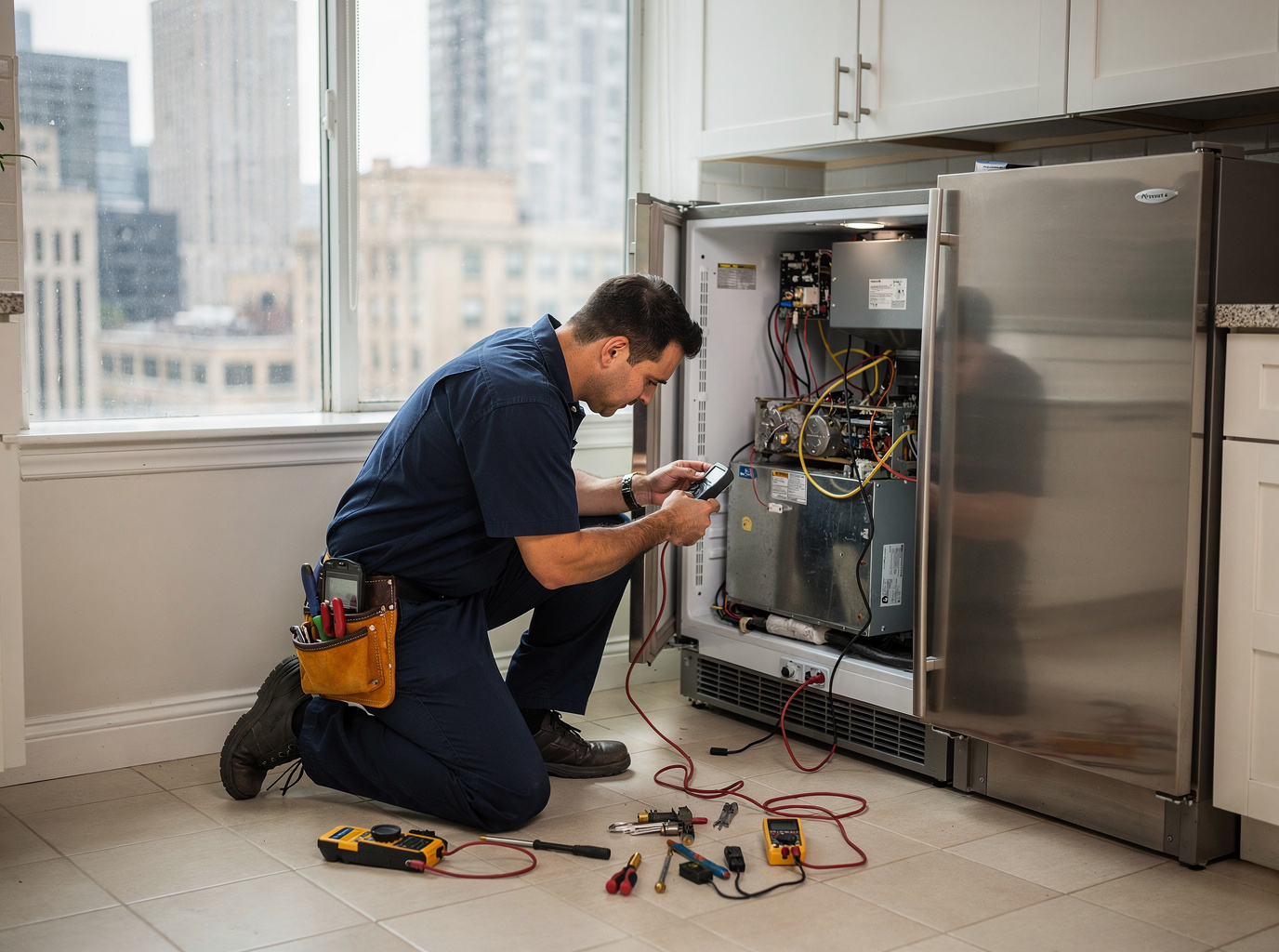
Appliance Repair Services in Loop, Chicago, IL start with a simple fact: a lot of Loop kitchens and laundry rooms sit inside high-rise condo towers and converted older office buildings, where access is controlled by a building engineer, a freight elevator booking, or a loading dock schedule. We work around those realities. When a refrigerator quits on a Friday night near Millennium Park or a dishwasher floods a unit above Michigan Avenue, we coordinate with the front desk and the building staff so the technician arrives with the right parts and gets in and out without losing a day.
Our shop is based at 150 E Huron St, just a few blocks from the Chicago Riverwalk and the Art Institute of Chicago, so response into the Loop core is short. Many of the appliances we see here are built-in refrigerators, slim dishwashers, stacked washer-dryers in closets, and wall ovens sized for tight galley kitchens. Those units are harder to pull, so we bring the right dollies and protection for floors and cabinetry before we start, and we explain what we found before we touch anything.
Chicago's humid continental climate shapes the calls we get. Summer humidity pushes condenser coils and ice makers to work harder, and once winter temperatures drop and the wind funnels between downtown towers off Lake Michigan, supply lines and exterior-facing appliances take a beating. Whether the job is in a Grant Park-adjacent highrise or a Willis Tower office pantry, we give an upfront quote before work begins and show you the failed part when we can.
Around Loop, Chicago, IL
We regularly work near:
- 📍Millennium Park
- 📍Art Institute of Chicago
- 📍Grant Park
- 📍Chicago Riverwalk
- 📍Willis Tower
Appliance Repair Services in Loop, Chicago, IL — Local Notes
- •Many Loop residences are in high-rise condo buildings with shared risers and strict move-in and service rules. Expect to schedule a building elevator reservation and confirm whether a certificate of insurance is needed before a technician enters, since the building, not the unit owner, often sets those terms.
- •Loop units often have compact, built-in appliances that were chosen for the original floor plan. Replacing a built-in fridge or wall oven means measuring existing cutouts and ventilation clearances before ordering, because a size mismatch can cost a return trip.
- •Older mid-rise buildings in the South Loop and near the West Loop still run original laundry and drain lines. Clogged condensate drains and hoses are a common cause of water damage on upper floors, so we check drain paths and shutoff valves on every visit.
- •Downtown wind and the lake-effect cold in winter can affect exterior-facing range hoods, dryer vents, and ice makers on upper-floor balconies. Venting problems are easy to miss in an office or condo that rarely gets a full inspection, so we look at airflow as part of the diagnosis.